
Environmental Spotlight
Twice Believed Extinct
Mar
Twice Believed Extinct:
The Black-footed Ferret
Writing and Photography by Moose Henderson
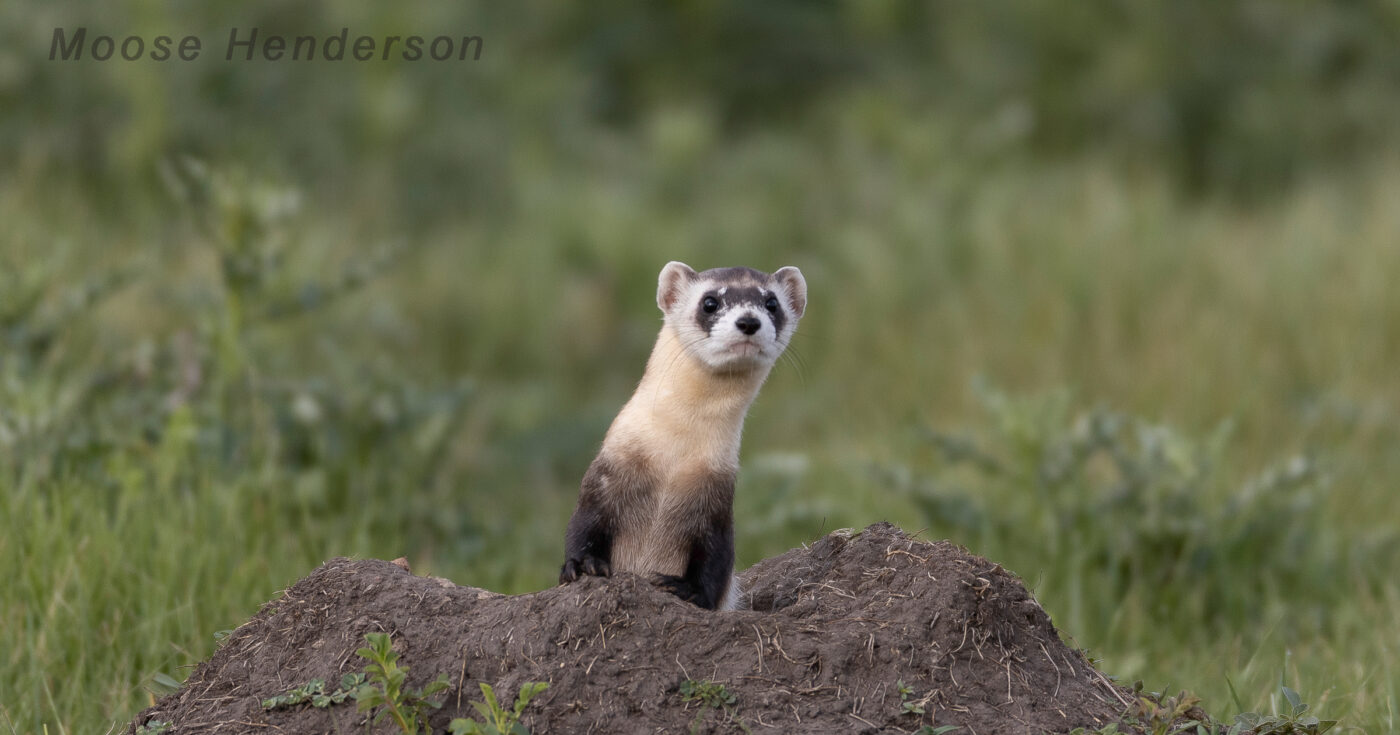
Considered one of the most endangered North American animals, the Black-footed ferret (Mustela nigripes) is shaped like a short-haired dachshund, and with its black mask, looks something like the Lone Ranger. These ferrets are considerably smaller than the canine lookalikes, though, at 18 to 24 inches in length and 1.5 to 2.5 pounds. The tan to cream colored ferrets are nocturnal, fossorial (live underground), and are a flagship species for prairie and grassland conservation.
Prior to the settlement of the Great Plains, grasslands and prairies extended from Canada to Mexico in the Midwest. Biologists estimate between 500,000 and one million Black-footed ferrets lived within prairie dog communities in this area. Prairie dogs represent approximately 90 percent of Black-footed ferret diet, and ferrets also depend on prairie dog burrows for homes and protection from winter extremes. Widespread conversion of prairie and grasslands to farms and ranches, combined with the purposeful elimination of prairie dogs from this land, decreased ferret numbers dramatically.
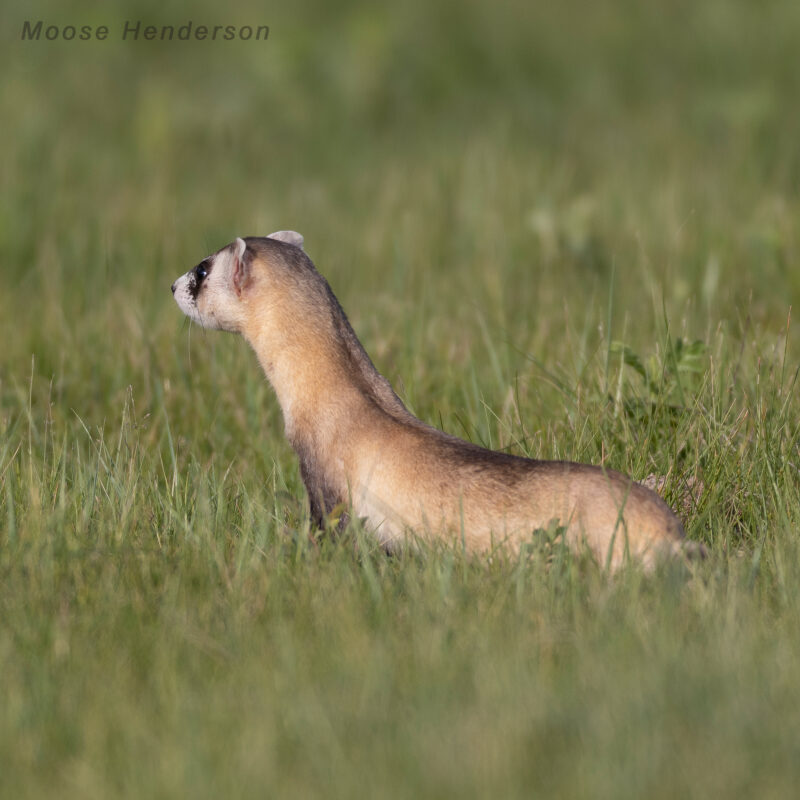
Black-footed ferrets, the only native ferret to North America, were believed to be extinct in the 1950s. However, a resident wild population was discovered in South Dakota. These ferrets were then captured, and a captive breeding and reintroduction program began. Unfortunately, because of disease (plague and distemper), this reintroduction was not successful, and ferrets were declared extinct in 1979.
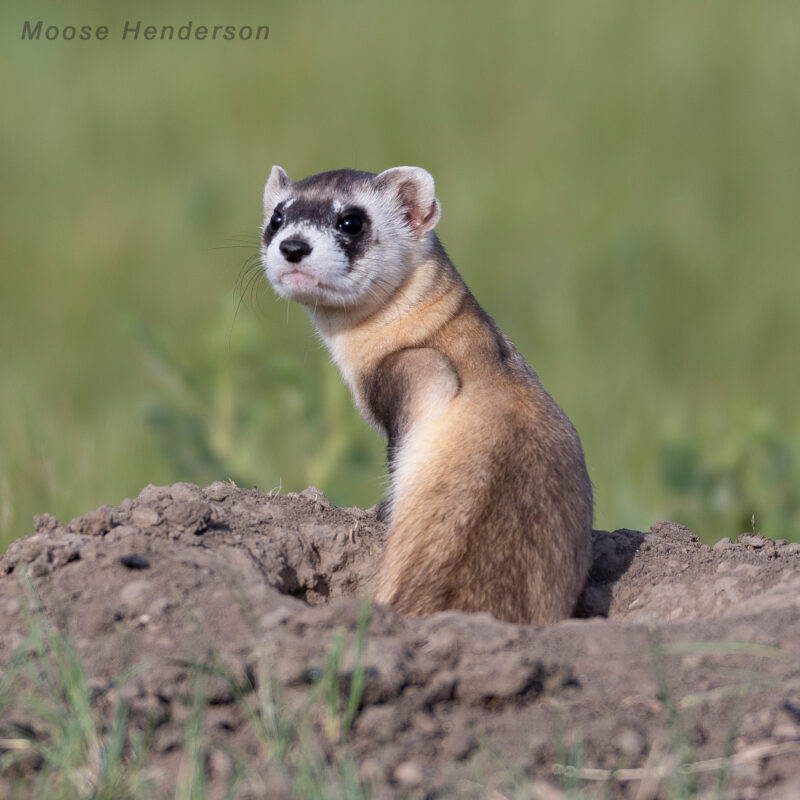
In 1981, a ranch dog named Shep, from Meeteetse, Wyoming, dragged home a recently deceased animal he had found near the ranch. The ranch owners contacted a taxidermist, who identified the animal as a Black-footed ferret. The taxidermist alerted authorities, and the last remaining ferret colony was found on a nearby property.
The remaining ferrets were captured and became the foundation for the successful reintroduction of Black-footed ferrets to eight states, Canada, and Mexico. Because the remaining population was small (seven reproducing females), these reintroduced populations suffered from a lack of genetic diversity, which makes animals more susceptible to disease and genetic abnormalities.
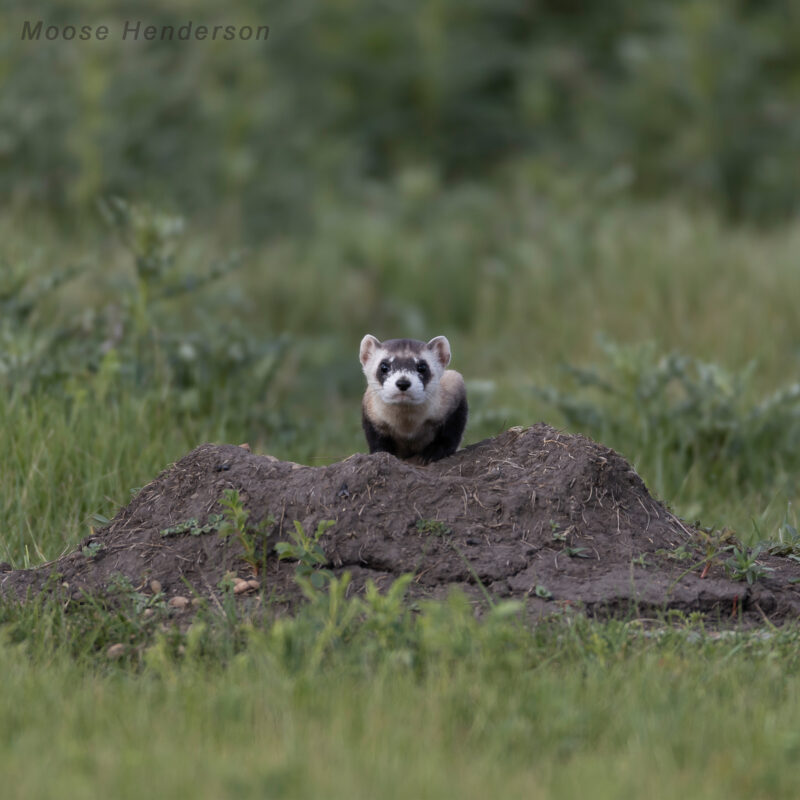
Thankfully, new genetic diversity has been introduced into ferret populations with the first successful cloning of an endangered species. Elizabeth Ann was born on December 10, 2020, from cells harvested from Willa, one of the original ferrets captured on the Wyoming property, but she never reproduced. Tissue from Willa, with about three times the genetic diversity of current ferret populations, was used for strategic conservation cloning. Sadly, Elizabeth Ann was unable to breed. However, two other ferret clones were born, and one, Antonia, has successfully bred and borne offspring.
Black-footed ferrets are still critically endangered and face numerous challenges. Still, with our help, these adorable predators can continue to hold their flagship status as a beacon for prairie and grassland conservation.
Writing and Photography by Moose Henderson
Environmental Spotlight
Illuminating the sciences of life and the natural environment.
