
Habitats on the Edge
Amazon River Basin
Mar
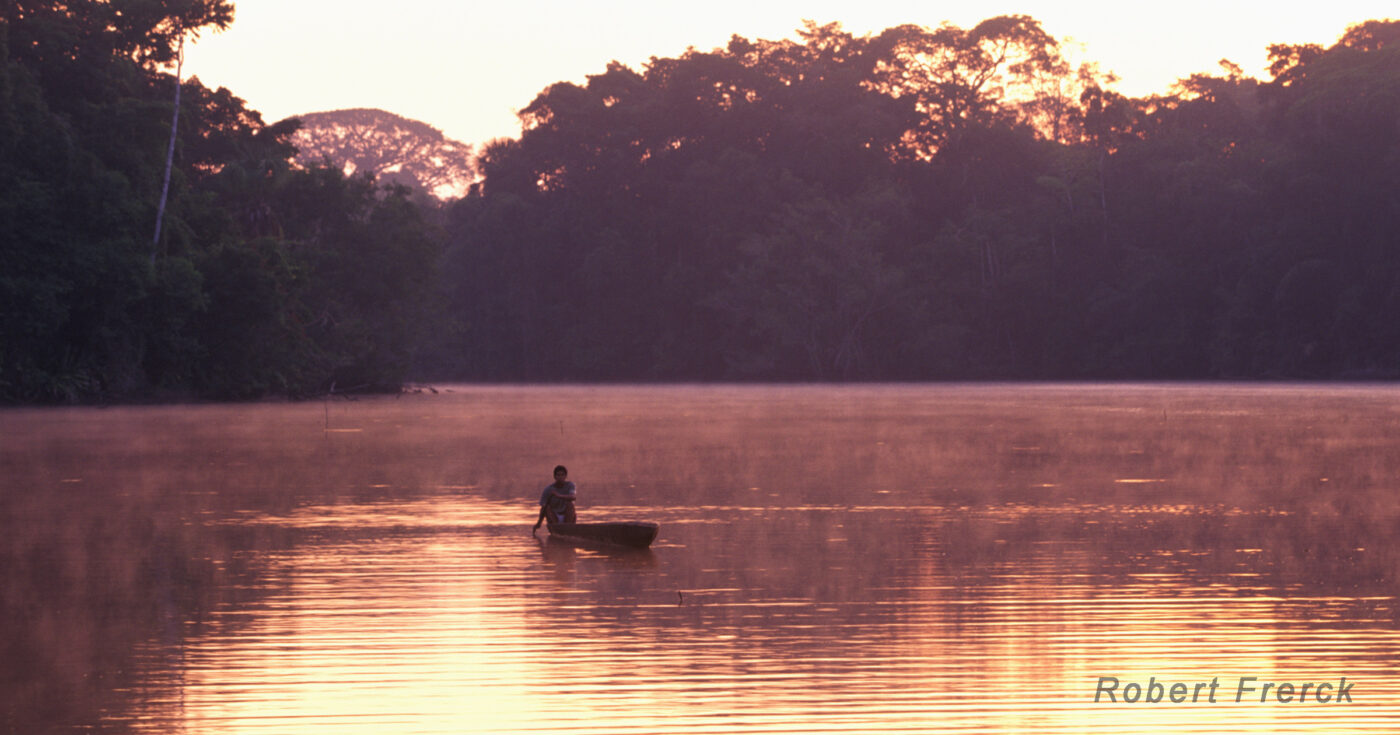
Amazon River Basin Napo River (Amazon tributary) down river from Coca an indian in a dugout canoe in primary rainforest at sunrise, Oriente, Ecuador, by Robert Frerck of Chicago, Illinois

Amazon River Basin
By Katelin Kukk
This extraordinary ecosystem, located in Central and Eastern South America, is teeming with life. The Amazon River Basin features a varied topography, with elevations ranging from sea level to 6,500 meters. Most of the basin is covered in tropical rainforests, which account for more than 56% of all broad-leaf forests. The area supports tremendous biodiversity, including 40,000 plant species, 2,000 fish species, 370 reptile species, and many more.
While it may be difficult to pinpoint which animal was the first to inhabit the basin, researchers have found countless fossils dating as far back as 12 to 15 million years ago. Arthropods, vertebrates, mollusks, plant fossils, and more have all been discovered in the region. The first fossil-bearing amber, which contained a small fly thought to be living during the Miocene epoch, was found in 2006. This evidence supports the idea that the Amazon River Basin was just as ecologically diverse in ancient times as it is today. While discovering the first animal inhabitants is exciting, learning about the first human inhabitants is equally interesting!
The first humans arrived in the Amazon around 13,000 years ago during a great mass migration across the Americas. Analysis of rock shelters revealed charcoal, high levels of organic matter, and stone fragments, indicating the presence of civilization within these shallow caves. These early inhabitants hunted the Amazonian animals, created stone tools, and painted their stories on the walls of the caverns. Some of those same animals may still be living within the basin today.
The Amazon River Basin hosts a diverse array of creatures, including pink river dolphins, jaguars, piranhas, monkeys, sloths, poison dart frogs, and many more. The macaw, a species of bird ranging in a multitude of colors, is one of the most iconic and popular animals in the Amazon. Mutualism, parasitism, and predation are only a few of the complex interactions shared by the basin’s inhabitants that this delicate environment relies upon. Although the basin is currently home to an array of impressive species, climate change poses a looming threat, casting a dark cloud over their future.
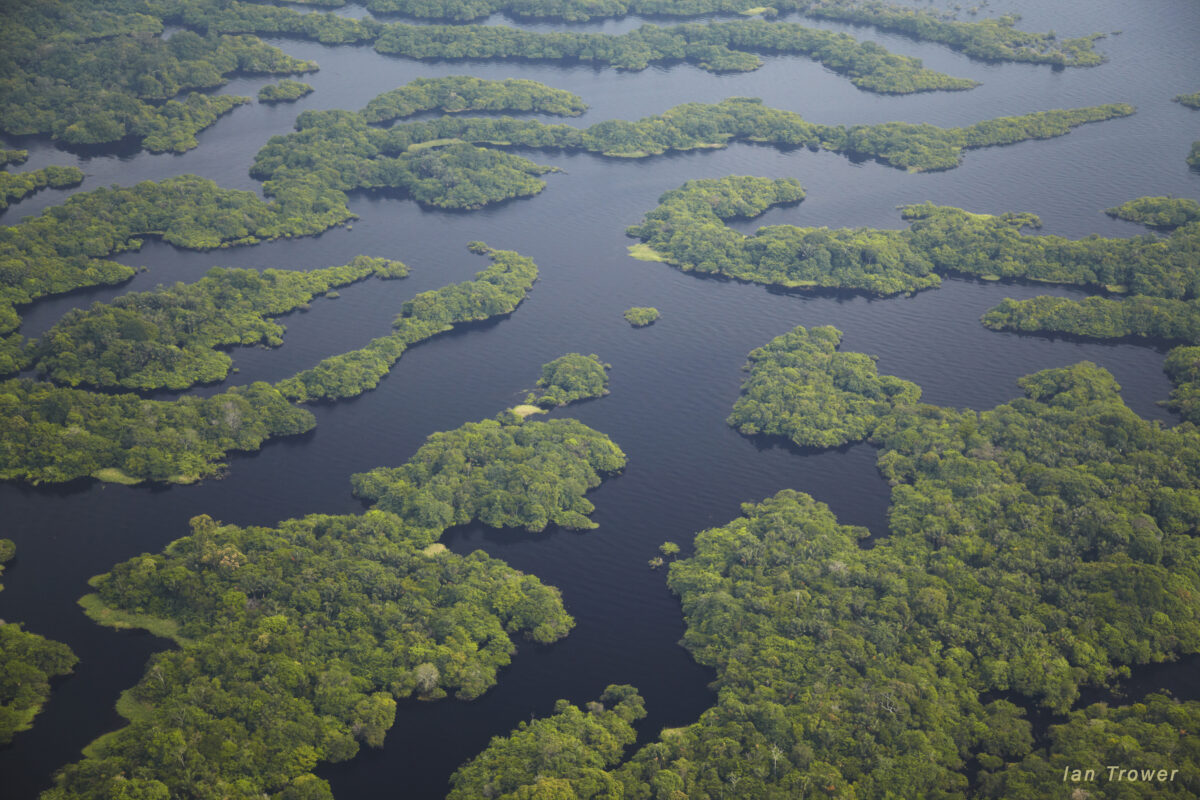
Aerial view of Amazon rainforest and tributary of the Rio Negro, Manaus, Amazonas, Brazil, South America, by Ian Trower of Hong Kong, China
While climate change is often associated with rising sea levels and increased flooding, the Amazon River Basin is experiencing quite the opposite. Severe droughts have been more frequent, the worst of the century occurring over a decade from 2005 to 2016. However, 2023 brought the most difficult one yet, with steadily low rainfall and high temperatures throughout the entire year. These natural disasters have destroyed crops and fisheries and sparked widespread forest fires. Consequently, biodiversity is declining as species and habitats are being disturbed.
Wildlife in the region shows signs of struggle due to rising temperatures. Fish are growing smaller, becoming less abundant, and females are reproducing at younger ages. Terrestrial animals are also feeling the impacts of the heat, moving to higher altitudes to escape the blistering temperatures. As a result, disruptions to the food web are leading to a decline in a variety of organisms. Overall, the future for these species looks fairly grim.
Scientists predict that an increase in exotic species will out-compete native organisms, making them disappear from their current habitats. By 2050, temperatures in the basin are expected to be 2 to 4 degrees Celsius warmer than they are currently, and the dry season could extend up to a month longer. Wildfires could start to increase, and the once lush and green forest we know could become a savannah. Future generations may never see one of the most extraordinary basins in the world, certainly not as we know it today.
To conclude, the Amazon River Basin is an exquisite ecosystem, filled with an abundance of fauna and flora. Exploring this rainforest, you’ll find some of the world’s most remarkable organisms not to be found anywhere else. Unfortunately, climate change has started to take effect in this beautiful region and shows no signs of stopping in the near future. One way we can help is by donating to charities that support and raise awareness about the Amazon River Basin.
Amazon River Basin
Natural environments on the edge of survival in an ever-changing world.
