
Scientific Highlight
The Olive Ridley Sea Turtle
May

The Olive Ridley Sea Turtle (Lepidochelys olivacea)
By Jennifer Heilakka Tosso
Photographs by marine wildlife photographer Andre Seale of Honolulu, Hawaii
Sea turtles are among the world’s most beloved sea creatures and have garnered great interest from the global community and scientists alike. The affection afforded these creatures has given researchers the resources they need to study and observe them. The olive ridley sea turtle (Lepidochelys olivacea) is one of the most common and easily accessible turtles, placing it at the forefront of scientific observation. Because the olive ridley is the most abundant sea turtle species in the world, the fascinating behaviors they exhibit are much more apparent. The turtle’s population-wide arribada, an incredible event comprising thousands of ridleys nesting upon a beach simultaneously, has contributed to the significant increase in public awareness of this species.
Olive Ridley turtles grow to about two feet in carapace length with between five and nine pairs of lateral scutes, the bony plates on a turtle’s shell. Surprisingly, they are the second smallest sea turtles. The name olive ridley comes from the olive color of its shell, which has been described as heart-shaped and slightly rounded. Males and females will grow to about the same size and appearance, but males are distinguishable by having a less rounded shell, a longer and thicker tail, and enlarged claws on their front flippers. All of these notable differences are thought to aid males in mating rituals. These turtles rarely weigh over 110 lbs., with the endangered populations of Mexico weighing an average of 75 lbs. Their exact lifespan is unknown, but many sources suggest they can live to about 50 years.
The olive ridley turtle is a pelagic species. This means most of their time is spent in the open waters of the ocean. They will feed on algae, crustaceans, mollusks, and other benthic (bottom dwelling) organisms, but will also take jellyfish and seaweed when available. They have a circumtropical distribution, meaning that they can be found in the tropics all around the world. They are excellent navigators and will often return to the same beaches where they were born to lay their eggs. The egg-laying process of the olive ridley has also gained strong interest in the public eye for its unique and impactful nature.

Olive ridleys exhibit two different nesting behaviors, the most prevalent of which is solitary nesting. Solitary nesting is relatively self-explanatory: females return to the beach where they were born to lay their eggs in a solitary nest. The less prevalent, but most notable, nesting behavior they exhibit is the synchronized mass nesting called an arribada. This is unique among sea turtle behavior and what olive ridleys are commonly known for. During these periods, hundreds of thousands of females will gather offshore of the nesting beach and simultaneously come ashore to lay their eggs. Females will nest one-to-three times per season annually once they reach maturity at 14 years of age. They will dig their nests to about 1.5 meters in depth and will lay approximately 100 eggs in each clutch. The nest is then covered by packing down the sand with their plastron (the underside of their bellies).
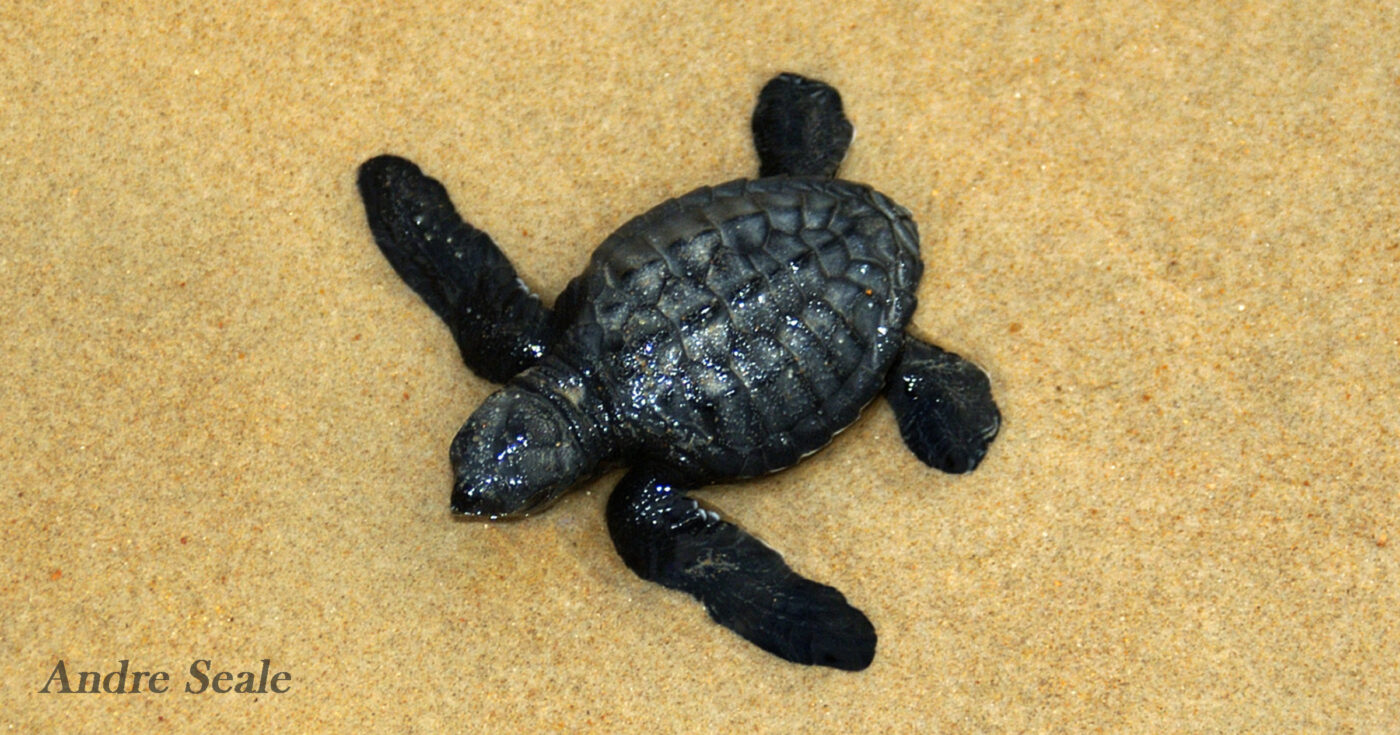
During an arribada, the sheer number of females can cause limited spacing for nest sites, causing many of the previously laid nests to be accidentally dug up by new nesting females. Baby turtles will incubate for about 45-65 days before hatching. Hatchlings will emerge at night and move towards the brightest horizon, usually (and hopefully) the moon reflecting off the ocean. As in all sea turtle species, the sex of the hatchlings is determined by the temperature of the nest during the second trimester of incubation. Higher nest temperatures will yield more females, while lower nest temperatures will yield more males.
Although there have been some studies on olive ridleys, the current population size is not well known. The National Oceanic and Atmospheric Administration (NOAA) five-year review of 2018 recorded that population trends varied depending on location. It was found that the endangered nesting populations of Mexico showed two increasing populations (Ixtapilla and La Escobilla), one decreasing population (Chacahua), and three stable populations (Mismaloya, Tlacoyunque, and Moro Ayuta). The review made a yearly estimate of about 1.39 million at-sea individuals, which it states is consistent with the increases seen on the eastern Pacific nesting beaches associated with those populations. NOAA also stated that the threatened populations in El Salvador, Guatemala, Costa Rica, and Panama show a declining trend, while populations in French Guiana and Brazil are small but increasing.
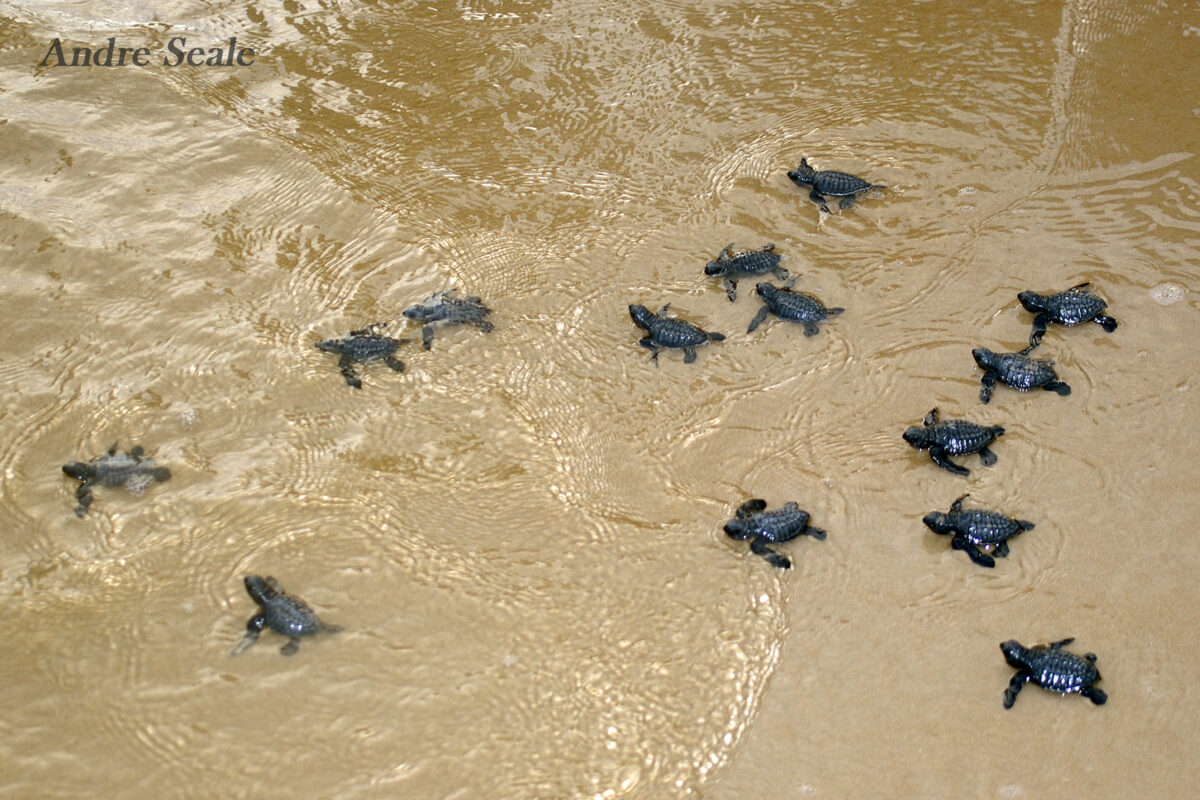
Hatchlings and adults alike face many challenges during their lifetime. The olive ridley population is listed as threatened under the International Union for Conservation of Nature and Natural Resources (IUCN) Red List, with many outside influences contributing to their current status. A primary threat to olive ridleys is the unintended bycatch of adults. Fishing vessels use several different types of equipment to catch fish, and sea turtles can become entangled in their nets or lines, leading to drowning or serious injuries. Another primary threat is the direct harvest of turtles and eggs for food by humans and feral animals like dogs, cats, and pigs. Loss of living and nesting habitat, vessel strikes, ocean pollution, and changing ocean conditions are also contributing factors to the population’s decline in recent years. While there are many factors contributing to their decline, conservation efforts have aided in reducing the loss of these turtles.
Several organizations have come together to aid in the protection of the olive ridley turtle. Commercial exploitation and trade in turtle shells, skins, and eggs has been largely reduced thanks to the protection status of the turtles by the IUCN. Other organizations, such as the Convention on International Trade in Endangered Species of Wild Fauna and Flora (CITES), the Convention on Migratory Species (CMS), and the Inter-American Convention for the Protection and Conservation of Sea Turtles (IAC) have also provided protection for the turtles.
Management during arribada events has helped to play a critical role in the conservation of sea turtle nesting grounds, greatly reducing the number of poached nest sites and harvested adult female turtles. Public outreach programs have also been instrumental in the education of local and global communities regarding the important role these animals play in the ecosystem, leading to the support of millions of people worldwide. The global movement to conserve all sea turtle species has led to the introduction of marine protected areas, controlled hatchling releases, beach clean-ups, and the use of turtle excluder devices in the fishing industry.
Every bit of protection helps when it comes to saving a species, and we all can play a part. The better understanding we have of these turtles, the better equipped we will be to protect them now and in the future.
The Olive Ridley Sea Turtle
Photographs by Andre Seale

Our environment as viewed through the eye of science.
