
Now on Nature
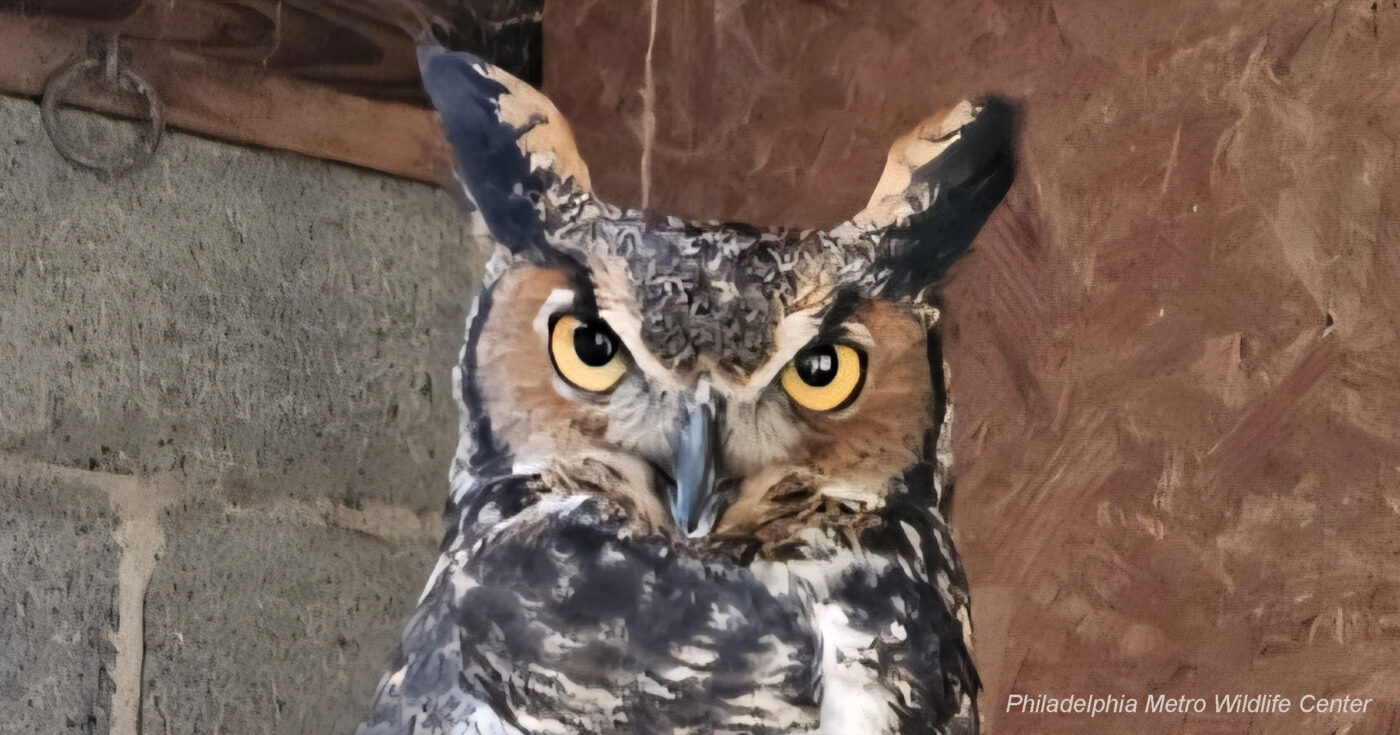
Great Horned Jackson
May
The Great Horned Owl
Jackson the Professional Surrogate
“His tenure is longer than mine!”
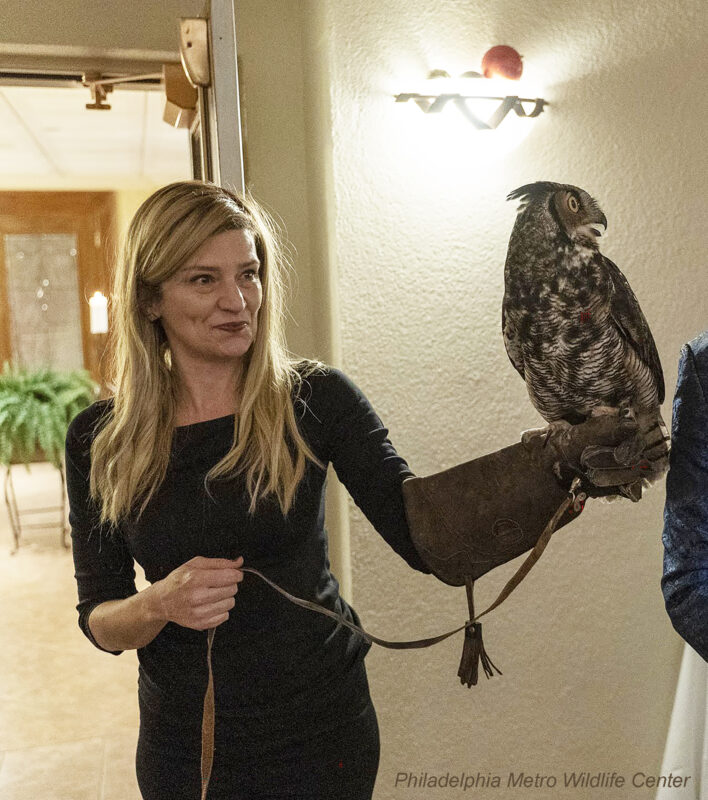
Michele Wellard, the Assistant Director at Philadelphia Metro Wildlife Center is referring to Jackson, the resident male Great Horned Owl, and unofficial Head of Department for their renowned owl surrogacy program.
Michele has been a part of the organization for the last seventeen years, and Jackson has her beat by two. She explained how he was rescued nineteen years ago when he’d injured his left wing flying into a barbed wire fence in Jackson, South Carolina…hence the name. Luckily, Rick Schubert, the Executive Director of Philly Wildlife, happened to be in the area for a conference and was able to bring Jackson home to Pennsylvania.
Although his wounds healed, Jackson did not recover his ability to fly. This meant that he could not be released, as he would not survive in the wild for long, and because he was placed in captivity as an adult, he was past the age when imprinting on humans is a risk. This combination of attributes allows him to perform two major functions for Philly Wildlife for which he would otherwise have not been suitable.
In addition to being an education ambassador to community groups like school children and hints for the elderly, for nineteen years Jackson has been a surrogate father to over thirty baby owls that have been brought to the retreat.
This is where Jackson truly shines.
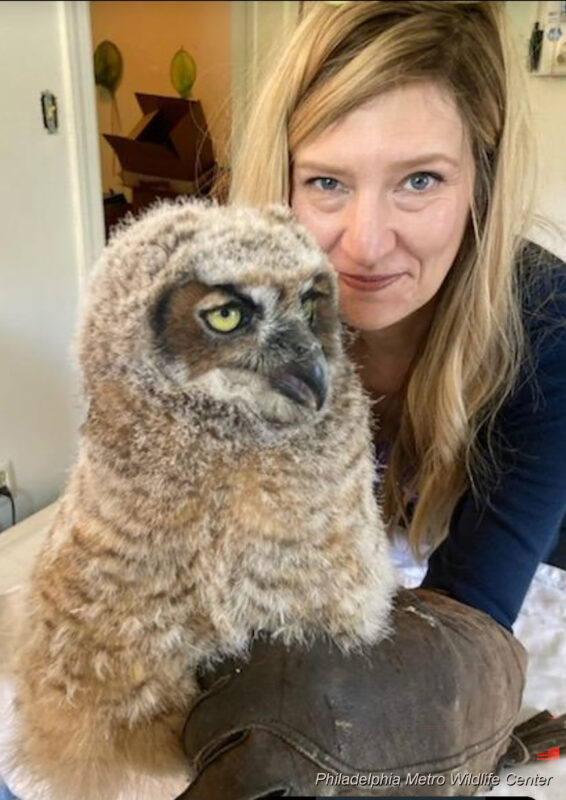
Often, baby owls fall out of their nests, or are orphaned, and once the Philadelphia Metro Wildlife Center determines that an owlet is in need of aid they advise callers on how to properly handle and deliver the nestling to the retreat. With owls this young, it is crucial that they not become attached to their caregivers, as they then often believe that their caregiver, a human, is their parent and lose their innate owl instincts, including the instinct to mate and procreate.
Luckily, Jackson instinctively understands the needs of baby owls and what is required to stimulate their development – so much so that Rick and Michele will introduce new great horned owlets to him shortly after their arrival so that they do not imprint on caregivers, and trust that Jackson will take the reins. He can tell when a baby needs him to chew the food provided by the Philadelphia Metro Wildlife Center, plays a pivotal role in their socialization as they grow into adolescents, and will even teach them – or rather show them – how to fly! Jackson has been captured on camera during what Michele called “secret owl lessons,” flapping his wings at nestlings while they mirror his movements in return.
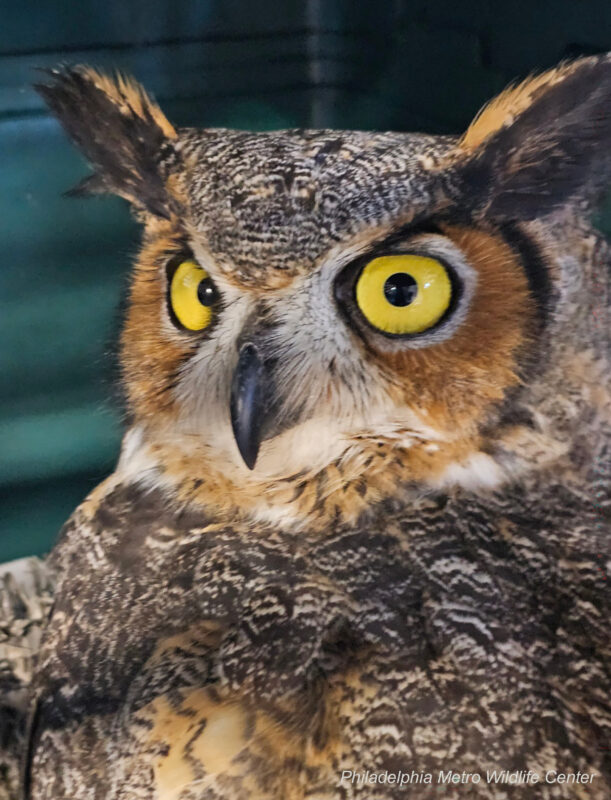
Typically an owlet will remain with Jackson for a couple of months, and once they are fully flighted and able to pass hunting school, they are relocated to a carefully scouted location with a water source, appropriate game for hunting, and where they are not in direct competition with other owls. The team leaves food to give them support for a little while (hacking). The now full grown owls are not marked or tracked in any way by the Philadelphia Metro Wildlife Center, and there is nothing to indicate that they were ever in their care – this gives them the best chance in finding a mate. Michele explained that Jackson provides the safest and most effective way to nurse owlets to this level of independence. “They don’t want petting from us,” she says. “When we see animals run off (or in this case soar off) to their new, wild life, that is the most rewarding outcome.”
Great Horned Owls average twenty-two inches in length, with females being larger and taller than males, which means that by the time Jackson has completed raising an owl, they’ve often significantly outgrown him! The longest lifespan recorded for this species while in captivity is twenty-eight years, and they are most recognizable by the feather tufts that protrude from either side of their heads and look like ears. Although they aren’t the largest owl species in North America, they are believed to be the strongest, with talons that are so deadly they could easily pierce through a human hand. Simply put, the Great Horned Owl is a vicious predator, and the PhiladelphiaMetro Wildlife Center’s mission is simple: keep the baby owls wild, an objective Jackson seems to be fully on board with.
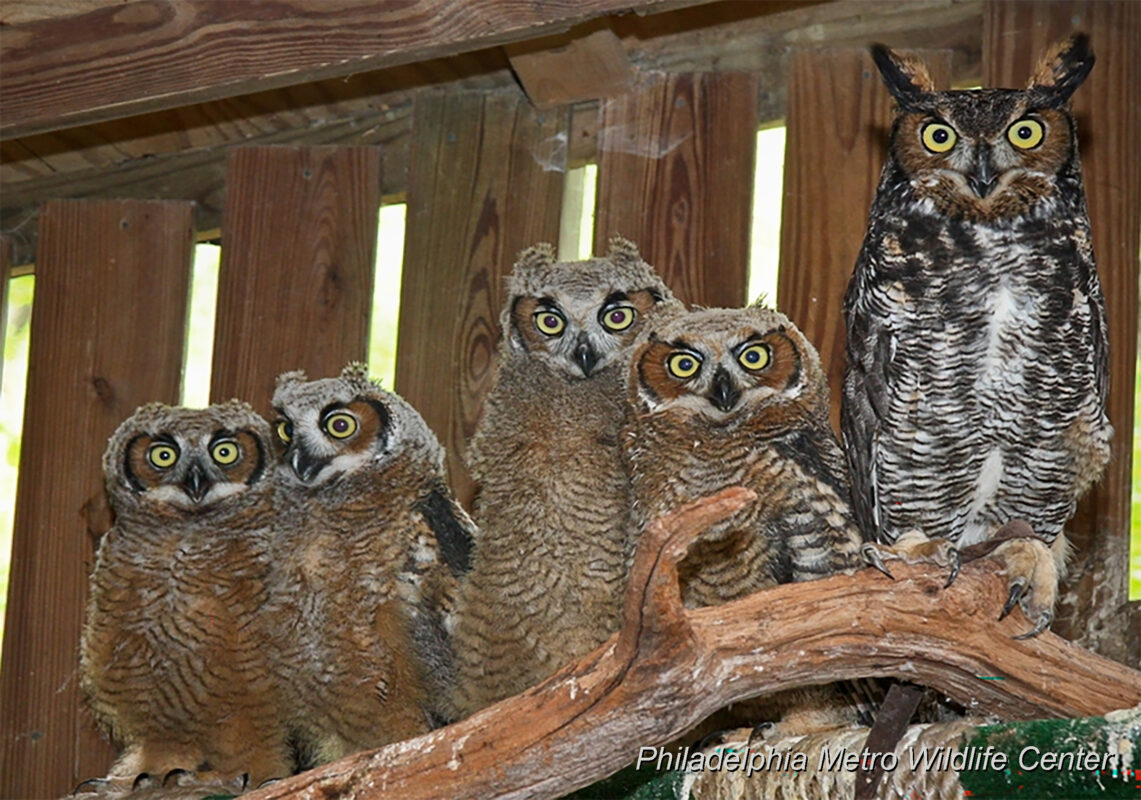
Unlike so many other bird species, Great Horned Owls raise their babies together, and both parents participate in feedings. It is believed that Jackson must have at one point fathered nestlings of his own with a mate before the injury that led to his inability to fly, which would explain why he is so successful at rearing baby owls, and might also explain why he seems to garner purpose from it.
Photographs by Philadelphia Metro Wildlife Center

Reporting on the brighter, encouraging, uplifting, and sometimes stranger side of things.
