
Elemental Studies
Fortifying Boron
Sep
Fortifying Boron
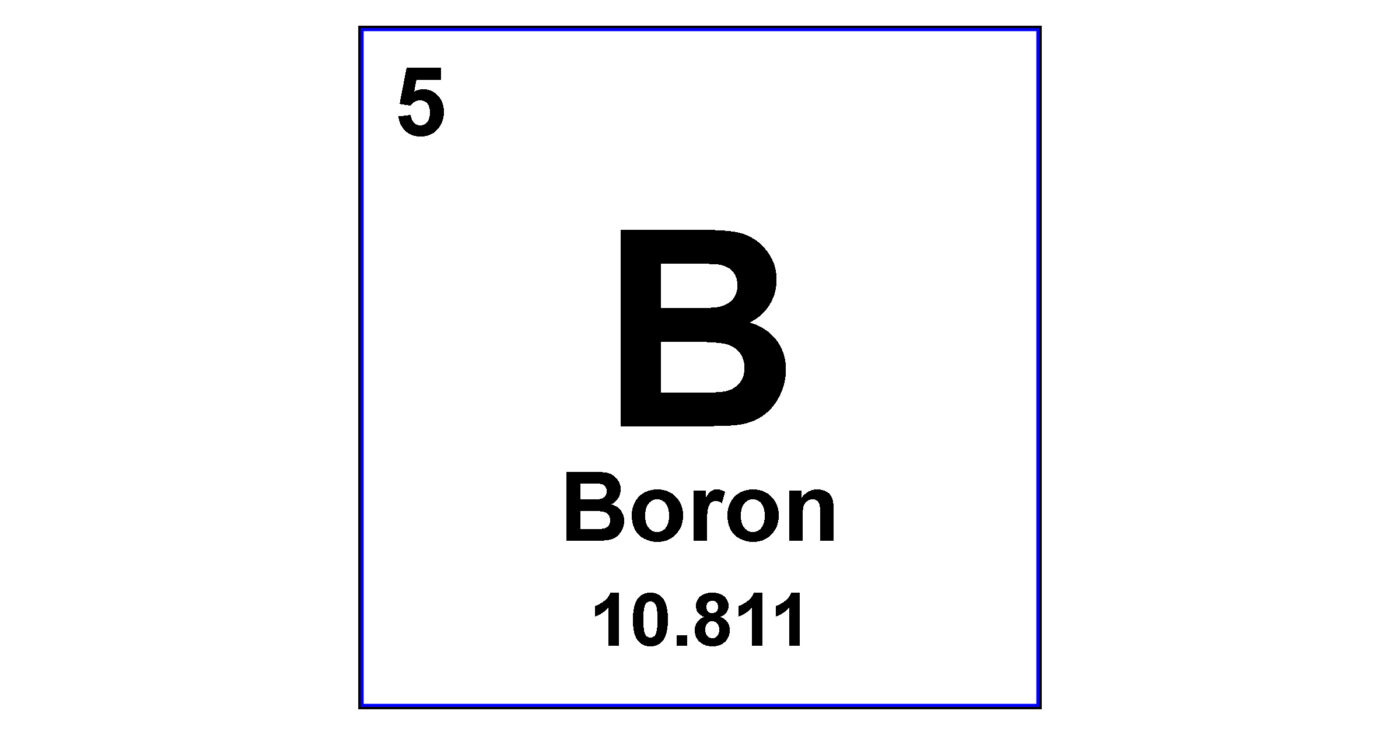
Boron, chemical symbol B and atomic number 5, is among the most versatile elements used in manufacturing across most industries. It is essential to plant and animal biology and has many accepted medicinal uses. It has three valence electrons in its outer shell, which yields a consistent electron deficiency, giving it flexibility similar to carbon, making it an outstanding chemical catalyst, and enabling multicenter bonding.
People used minerals that contained boron for centuries before the element was isolated. Sodium borate is a naturally occurring inorganic substance containing 10-11% boron, hence the common name borax. This compound was first discovered in ancient Persian and Tibetan lake beds. Egyptians used borax for mummification, the Chinese in ceramics and pottery, and the Romans as a flux in metalworking. The world found many uses for borax, but no one knew how or why it worked.
It wasn’t until 1808 that boron was isolated, and the mystery behind borax began to become clear. Great British chemist Sir Humphry Davy was experimenting with the substance in London at nearly the same time that chemists Louis Jacques Thénard and Louis-Joseph Gay-Lussac were following similar lines in France. These early experiments yielded a brown powder that contained a higher concentration of boron. Chemist Jöns Jacob Berzelius of Sweden performed more precise analysis in 1824, confirming that boron was a new element.
Boron is a metalloid element, meaning that it has both metal and nonmetal properties. In its amorphous form, it is a highly reactive, explosive brown powder. In crystalline form, it is an unreactive, hard solid that is chemically inert. It acts as an alloying agent and multipurpose additive for fortifying manufacturing components to improve hardness, structural integrity, thermal conductivity, and wear-resistance.
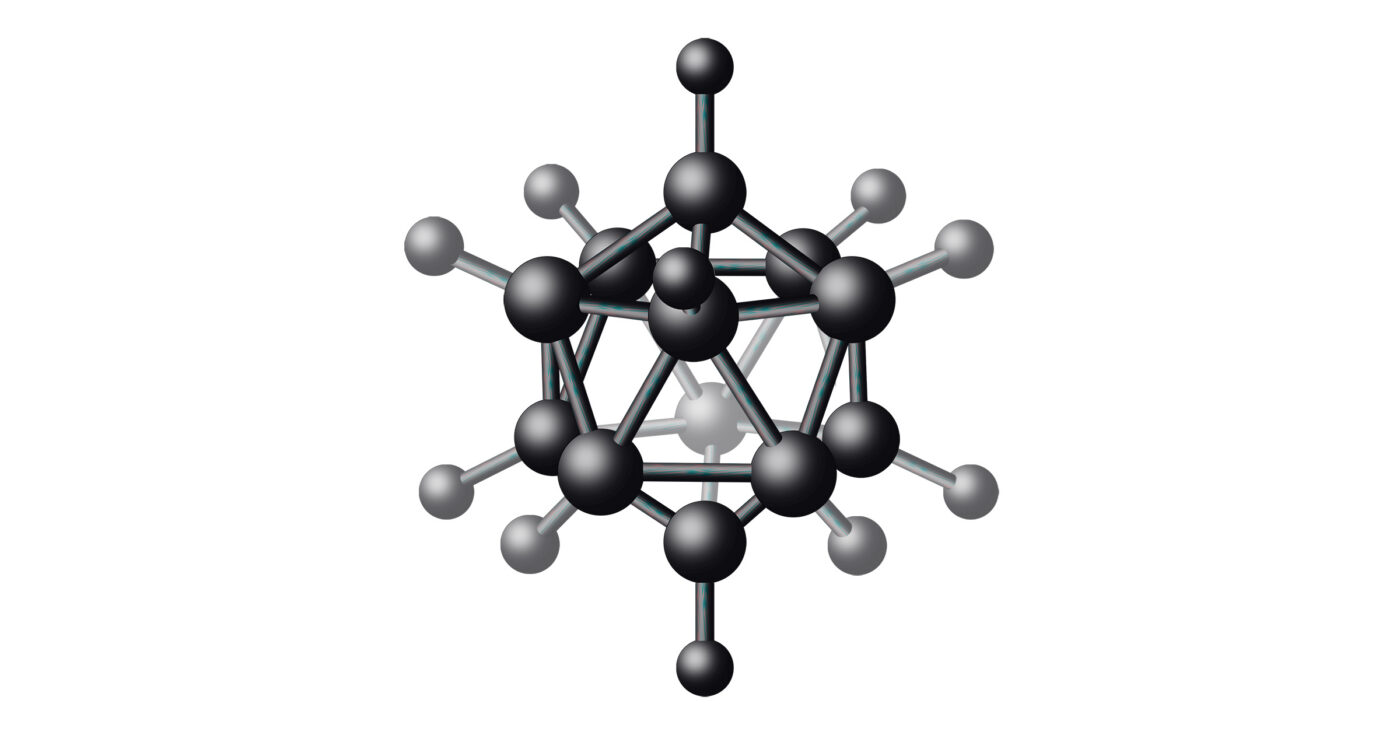
Because of its electron deficiency, boron can form complex icosahedral (polyhedron with 20 faces) structures where one pair of valence electrons links three atoms to form a three-center bond. Icosahedral structures are the most efficient method for building durable protective shells in nature.
To varying degrees, global trends toward advanced electronics, agricultural innovations, and clean energy all involve boron. The use of this unique element for medical applications, more energy-efficient building materials, and advanced water treatment technologies is on the rise. Boron is one of the elements you can count on to become even more essential in the future.
Know Your Elements!

Analyzing the characteristics and properties of our world’s paramount elements
