
By the Record
Haliaeetus leucocephalus
Jul
Bald Eagles
Photographs by Moose Henderson
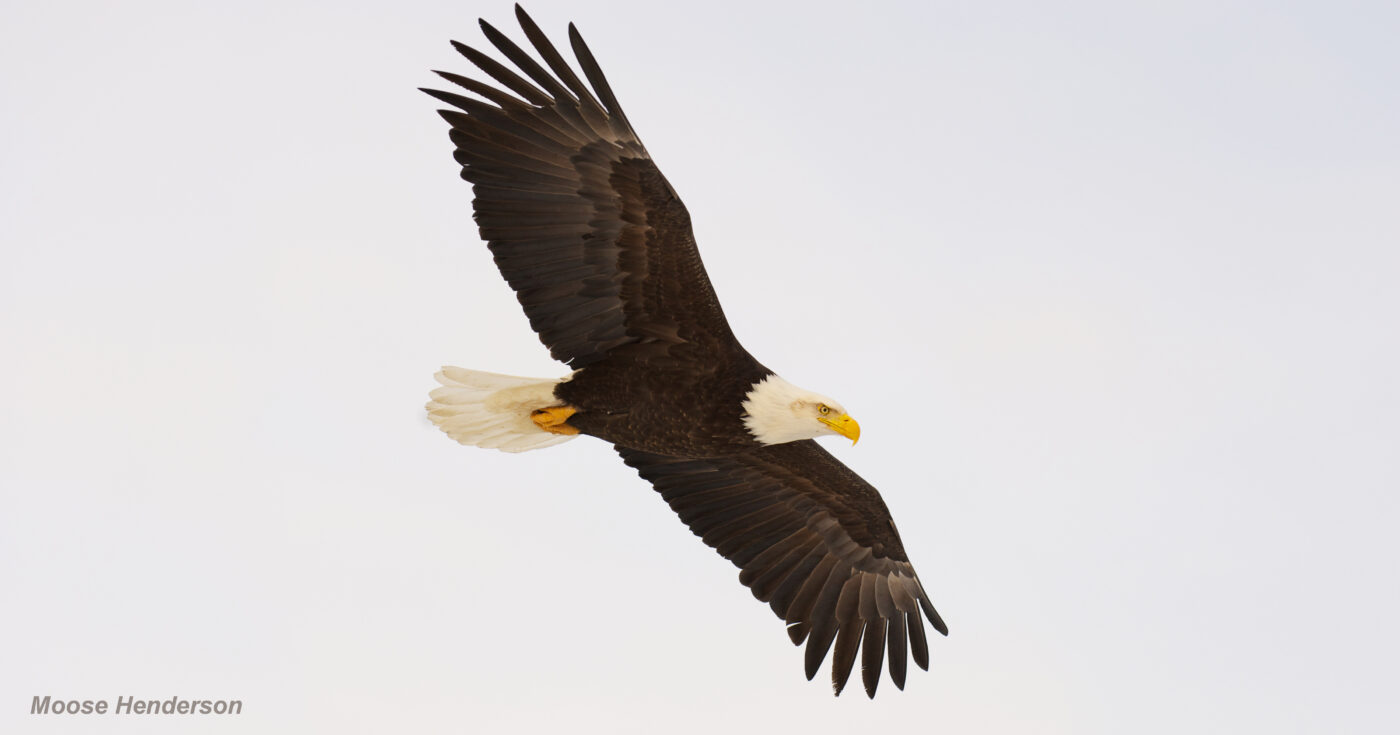
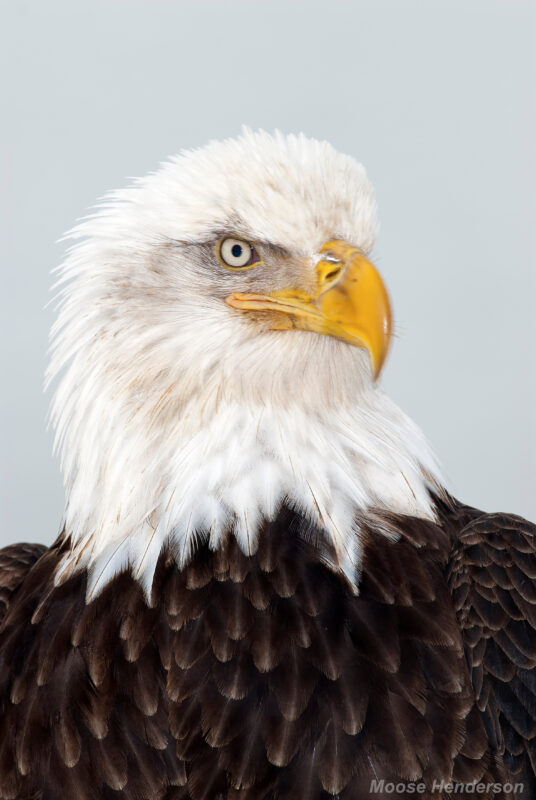
Haliaeetus leucocephalus (the bald eagle) is a large sea eagle with a striking pure white head in adulthood that is easily recognizable. Juveniles have dark brown feathers on their entire bodies whereas adults are brown only up to the neck.
Bald eagles are native to North America with a range from Alaska and Canada through the lower 48 US states into Mexico. They feed primarily on live fish but are opportunistic apex predators who will prey on birds, small to medium mammals, and carrion. Bald eagles choose the tallest and sturdiest trees for nesting near lakes, rivers, and coasts. Their nests are the largest of any North American birds; enormous platforms of thick intertwined sticks and branches lined with grass, moss, lichen, and seaweed.
Wild bird populations were on a significant decline through the middle of the 20th century. Bald eagles were on the edge of extinction. In 1962 marine biologist Rachel Carson published Silent Spring, a book that linked the manmade pesticide chemical dichlorodiphenyltrichloroethane (DDT) to the widespread decrease in bird populations. It wasn’t until 1968 that anyone could offer a valid reason why. Ecologists Daniel Anderson and Joseph Hickey proved DDT was responsible for thinning egg walls in experiments at the University of Wisconsin-Madison.
Biologists, environmentalists, and lawmakers took note. The Endangered Species Act (ESA) was signed into law in 1973 to prevent extinction and recover endangered species. It became illegal to hunt bald eagles, to destroy their habitat, and to use the pesticides that were the primary driver of their decline. Captive breeding programs were implemented to raise new generations of bald eagles. Many of these iconic eagles were reintroduced in Arkansas, California, New York, Pennsylvania, and Vermont.
The 1980’s saw a significant rebound for bald eagles, a trend that continues to this day. There were less than 500 breeding pairs in the world in 1963. Now there are over 300,000 of these majestic raptors in the wild across North America. The bald eagle is a celebrated success story for wildlife conservation, but the near loss serves as a warning. Test products before widespread use. Protect our natural resources- all of them.
Long live bald eagles!
Promoting conservation, one species at a time.

On the record, by the record
