
Water Saga
Sinking Maldives
Sep
Sinking Maldives
By Maya Planker
Photography by Sakis Papadopoulos of Athens, Greece
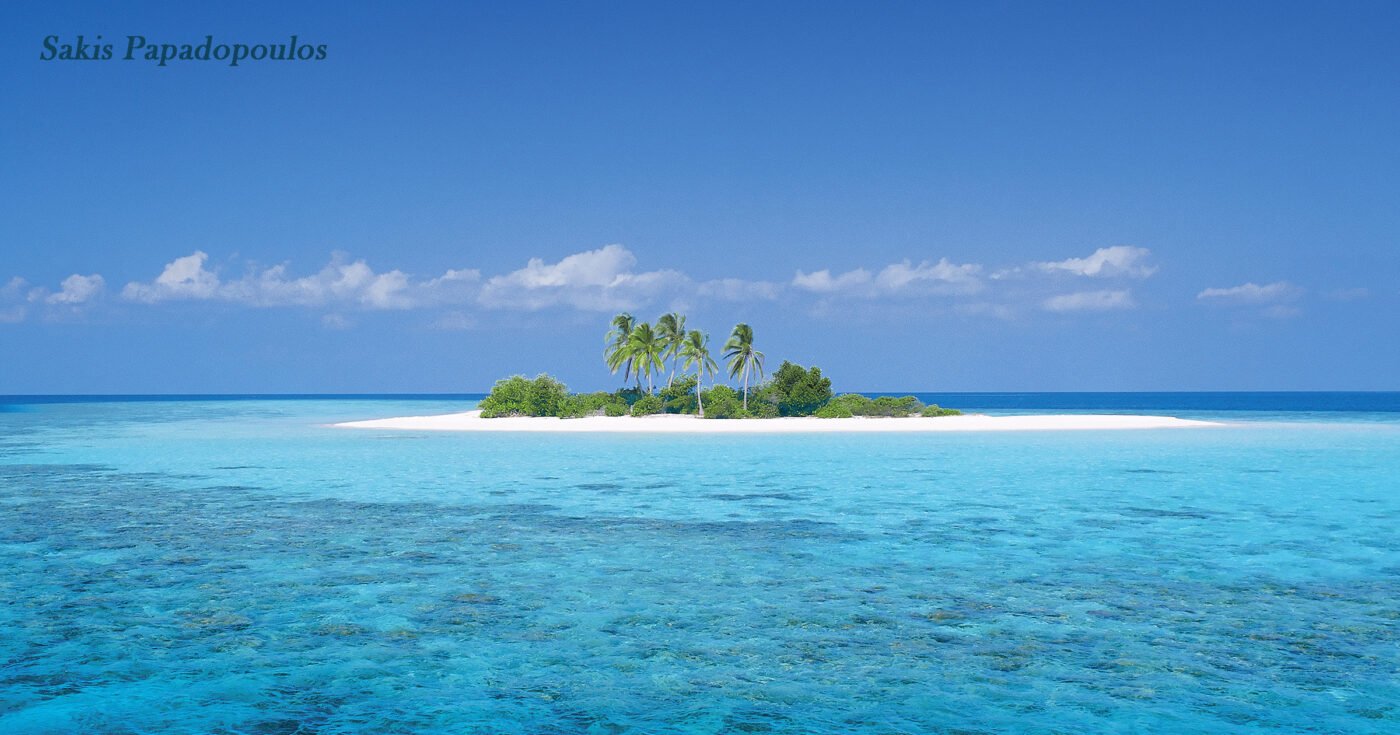
Crystal clear water, white-sandy beaches, and marine-life excursions are a few things that make the Maldives one of the most dreamt-of travel destinations. Over two million people from across the world visit the country every year, including the thousands of newlyweds who choose to spend their honeymoon there. After all, who wouldn’t want to experience this tropical paradise? Located in the Indian Ocean, the Maldives comprises 1,192 islands and is the world’s lowest-lying country, with an average elevation of five feet. and a peak elevation of 7.8 feet. Home to beautiful coral and an abundance of marine life, such as Manta rays, dolphins, sunfish, and the famous whale shark, it offers some of the richest biodiversity on Earth.
While the beauty of the Maldives is mesmerizing, a look beyond the luxury resorts and overwater bungalows reveals a crisis. The Maldives are extremely vulnerable to global warming. Because the majority of the islands are less than half a meter above sea level – and global warming increases sea level – scientists predict that some of those islands could potentially become uninhabitable by 2050. In addition, warming ocean temperatures also cause beach erosion and coral bleaching.
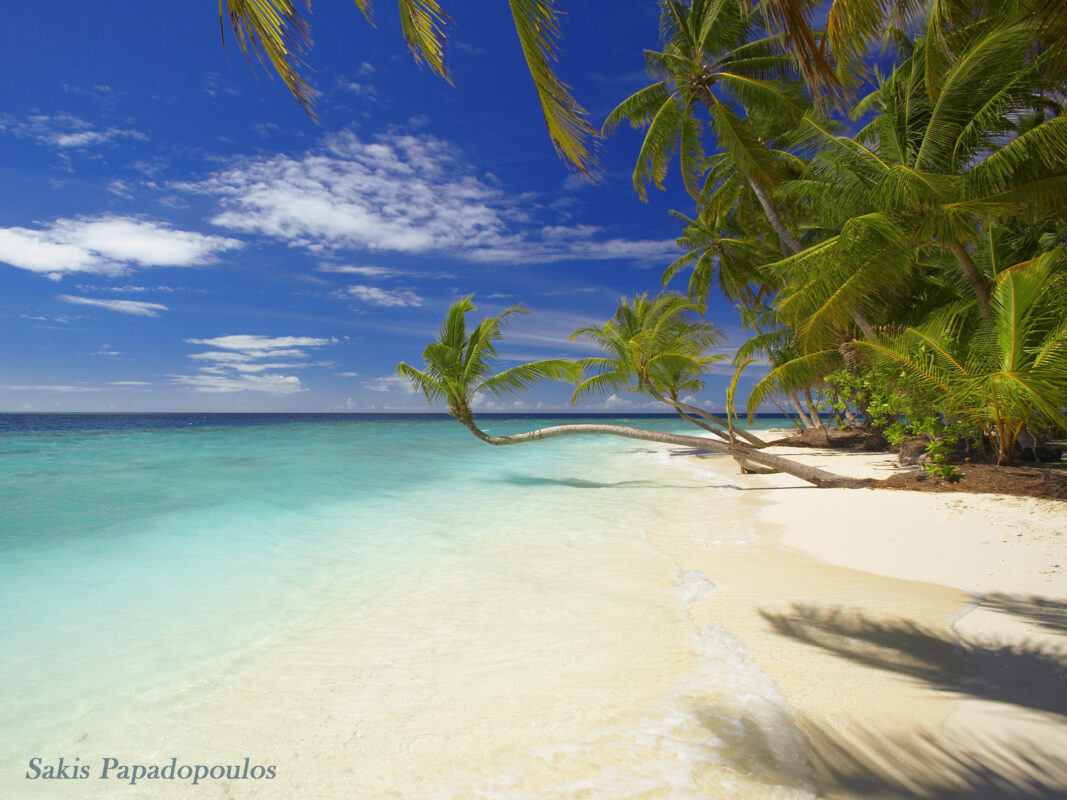
Another issue the Maldives is experiencing is freshwater drought. Rising sea levels cause saline intrusion, allowing salt water to infiltrate natural freshwater sources, like groundwater. In the capital city of Malé and at major resorts, this doesn’t necessarily present a problem because they receive imported water and have more advanced water infrastructure than many of the other islands. It’s the local Maldivians and remote islands that struggle with the contamination of groundwater, forcing them to rely on rainwater.
While many areas of the world are being proactive in the fight against climate change, for the Maldives, the climate crisis is a critical issue. However, the Maldivian government offers some hope with support from programs and funds, such as the UNDP (United Nations Development Programme) and IWRM (Integrated Water Resources Management), which are actively working to improve clean water access and protect the ecosystem.
Sinking Maldives
Photography by Sakis Papadopoulos

Exploring the delicate harmony of water and life
